How to Leave Work at Work — Mentally, Not Just Physically
Leaving the building is easy. Here’s what the harder kind of leaving actually requires.

Unwind After Work
When your laptop closes but your brain keeps looping — replaying conversations, emails, or decisions — it’s not because you’re “bad at relaxing.” It’s because your brain never got a clear signal that work is done.
Clock Out is a 5-minute private ritual you do right after work to unload unfinished thoughts — so your mind can actually stop thinking about work at night.
No setup. No decisions. Just one place to unload what’s still looping.
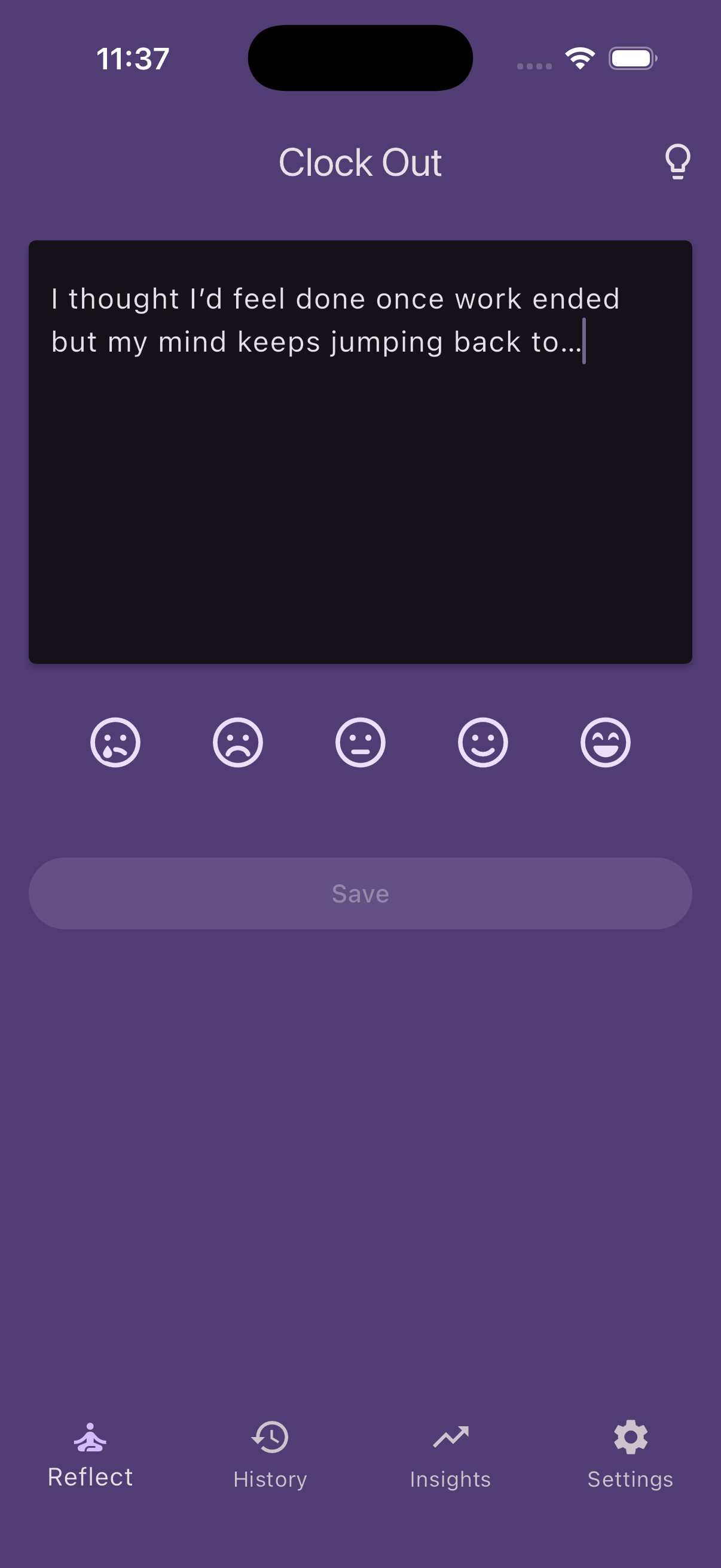
Capture what your mind is still holding…
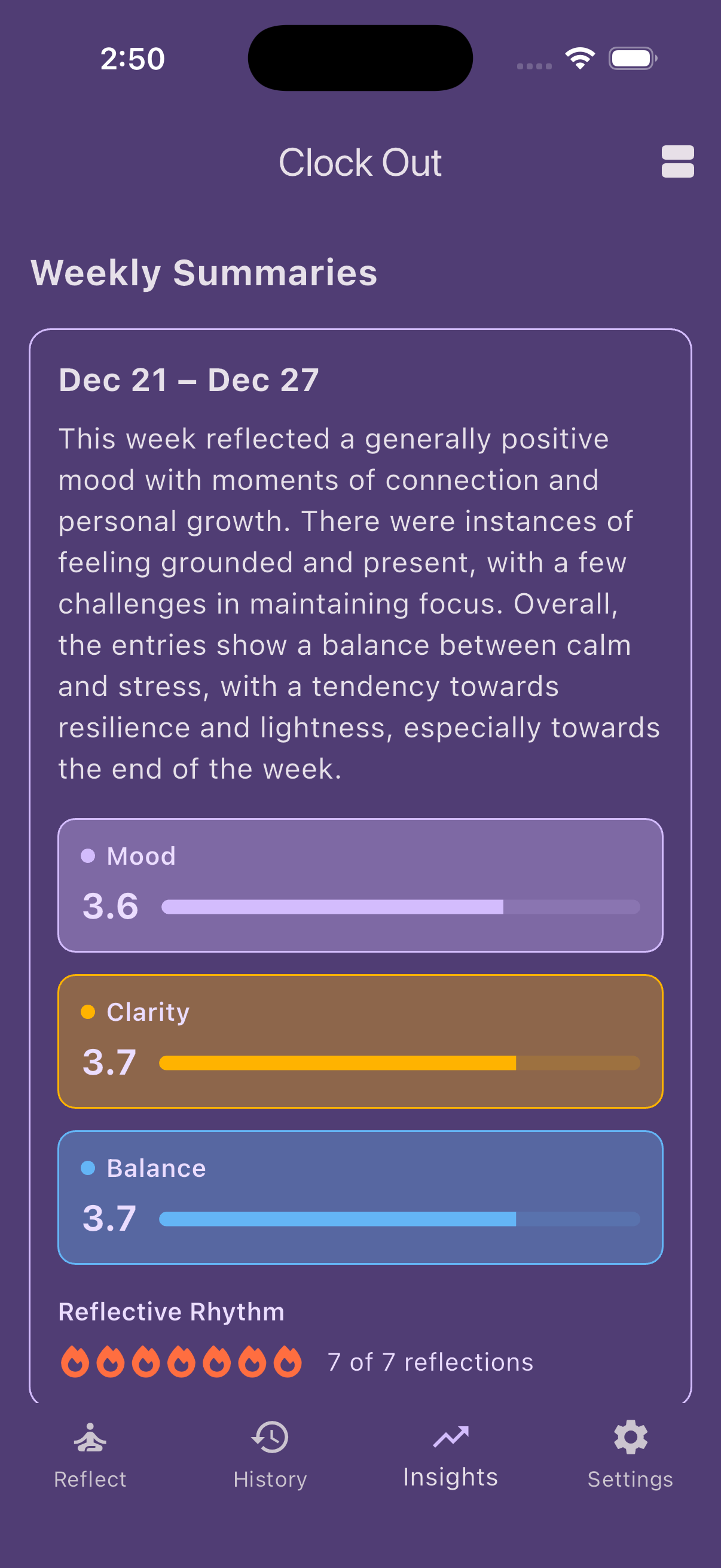
See patterns without judgment…
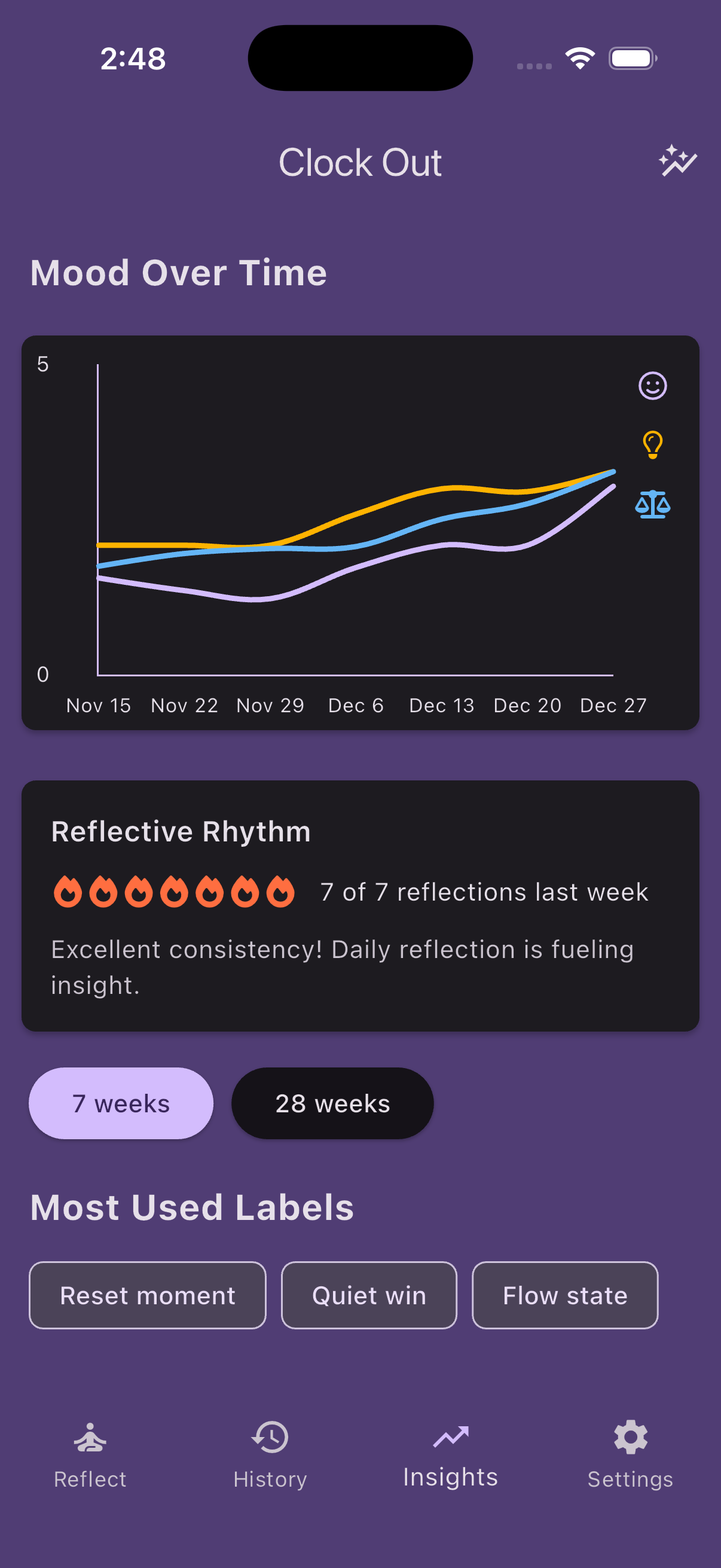
Notice what changes when work actually ends…
Distraction soothes the body. Closure quiets the mind.
After work, your brain is still holding unresolved threads: things unsaid, decisions unfinished, conversations replayed. Until those loose ends are acknowledged, your mind keeps looping them — even while you’re scrolling, watching TV, or lying in bed.
Writing those unfinished thoughts down gives your brain a place to put them. Once they’re externalized, your mind no longer needs to rehearse them. That’s what creates real mental closure.
It doesn’t help you forget work. It helps your brain finish it.
Done right after work — before your evening begins.
Open Clock Out when you shut your laptop or leave work. You’ll get one focused prompt designed to surface what your brain is still holding onto.
Write freely for five minutes. No fixing, no analyzing — just getting lingering thoughts out of your head and onto the page.
Finish with a short closing reflection that signals to your brain that the workday is over.
The difference isn’t writing — it’s giving your brain a clear place to stop.
Clear expectations build trust.
Patterns matter only if they help you stop repeating them.
See when work leaves you calm — and when it spills into your evenings.
Notice which weeks your mind shuts off easily — and which ones keep looping.
Watch the line between work and life get clearer week by week.
Your thoughts never leave your device.
Quick answers for people who can’t stop thinking about work after hours.
The most effective time is right after work ends. Clock Out gives you one prompt and a 5-minute space to write down what your mind is still holding, so your brain gets a clearer signal that the workday is over.
Usually because your brain still sees those moments as unfinished. When thoughts stay unexpressed, your mind keeps looping them. Writing them down can help create closure so they are less likely to keep replaying later.
Yes — but it is designed specifically for the end of the workday. Instead of open-ended journaling, Clock Out gives you a short, private ritual to help unload work stress and mentally leave work behind.
A notes app gives you a blank page. Clock Out gives you one prompt, a 5-minute container, and a clear ending. That structure makes it easier to reflect without spiraling or turning it into more work.
You do not need to know ahead of time. Clock Out starts with one guided prompt, and most people begin with a single sentence. The goal is not to write something polished — just to get lingering work thoughts out of your head.
Use it right after work ends, before dinner, TV, or scrolling. That timing matters because it helps your brain mark the workday as complete instead of carrying it into the rest of your evening.
No. Clock Out is a private daily reflection app, not therapy, diagnosis, or mental health treatment. It is simply a lightweight way to mentally close the workday.
No. Your entries stay on your device unless you choose to export them. Clock Out is built to be private by design.
Long-form pieces on why work follows you home — and what actually ends the day.
Leaving the building is easy. Here’s what the harder kind of leaving actually requires.
If work keeps running in your head after hours, your brain isn’t broken — it’s missing a closing signal.
Work rumination at night is a daytime problem surfacing after hours. Here’s what causes it and what reduces it.
The difference between people who leave work at work isn’t discipline — it’s a deliberate end-of-day routine.
What makes an end of day ritual actually work — and a simple template to build one that sticks.
If your brain won’t shut off after work, five minutes is enough to notice the difference.

